Definition
Methodology refers to the overall strategy and logic that guides how research is conducted. It explains how a study is designed, how data are generated and analysed, and why particular research choices are appropriate for addressing a given research question.
Methodology does not describe specific techniques or tools. Instead, it provides the conceptual framework that links research questions, philosophical assumptions, and methods into a coherent whole.
An Academic Definition
A widely cited and foundational definition of methodology is provided by Crotty (1998):
“Methodology is the strategy, plan of action, process or design lying behind the choice and use of particular methods and linking the choice and use of methods to the desired outcomes.”
— Crotty (1998, p. 3)
This definition highlights that methodology is concerned with the reasoning and structure underlying research, rather than with methods alone.
Methodology versus Methods
Methodology is often confused with methods, but the distinction is important.
- Methodology refers to the overall research logic and justification.
- Methods refer to the specific techniques used to collect and analyse data, such as surveys, interviews, observations, or statistical procedures.
Methods are selected within a methodological framework. Without a clear methodology, the use of methods becomes difficult to justify and evaluate.
Methodology versus Research Strategy
Methodology is also distinct from research strategy, though the two are closely related.
- Methodology describes the overall logic and rationale guiding how research is designed and justified. It explains how philosophical assumptions about reality and knowledge are translated into an approach to inquiry.
- Research strategy refers to the specific plan or approach used to conduct the study, such as a case study, survey, experiment, or ethnography.
Research strategy operates within a broader methodological framework. Methodology explains why a particular approach is appropriate, while research strategy explains how the study is organised in practice.
How Methodology Relates to Ontology and Epistemology
Methodology serves as a bridge between philosophical assumptions and practical research decisions.
- Ontology concerns assumptions about the nature of reality or what is being studied.
- Epistemology concerns assumptions about what counts as valid knowledge and how knowledge can be known.
- Methodology translates these assumptions into a coherent research strategy and set of research choices.
A well-articulated methodology ensures that research design, data collection, and analysis are logically consistent with the researcher’s underlying assumptions.
Methodology in Management Research: An Example
Consider a study examining organizational culture.
A researcher who views culture as something stable and measurable may adopt a methodology that emphasises structured surveys and comparative analysis. Another researcher who views culture as socially constructed may adopt a methodology centred on interviews, observations, and interpretive analysis.
In both cases, methodology explains why certain methods and research strategies are appropriate and how they align with the researcher’s understanding of the phenomenon under study.
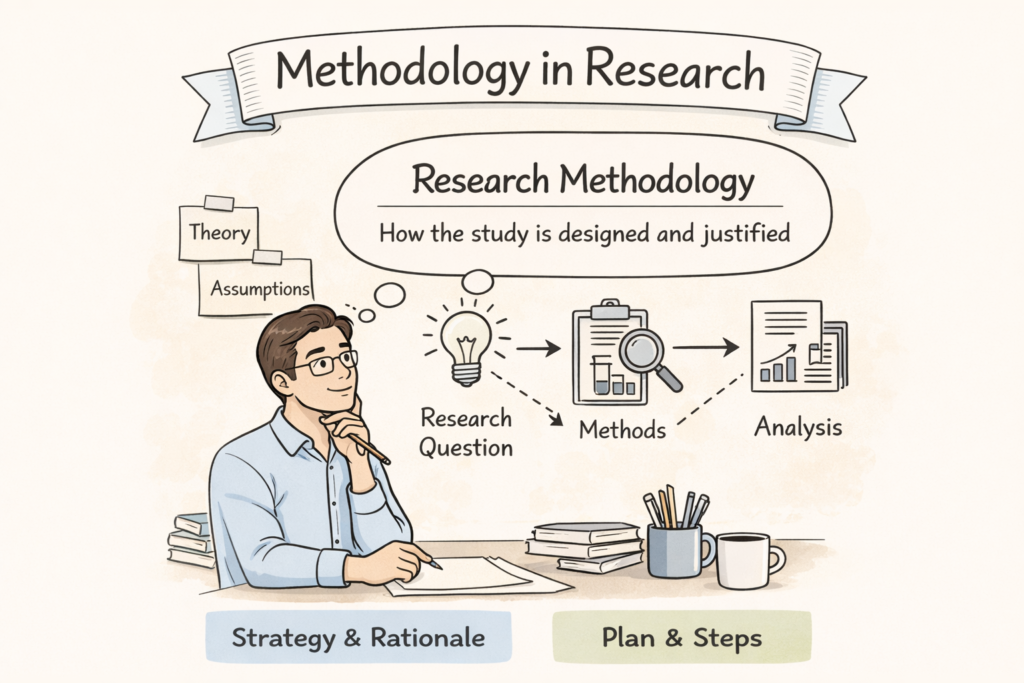
Figure 1: Methodology as the guiding framework that links research assumptions, design, and methods into a coherent study.
Why Methodology Matters
Clear methodological positioning enables researchers to:
- Justify research design choices
- Select appropriate research strategies and methods
- Assess the rigor and credibility of findings
- Communicate research decisions transparently
In management research, methodology is essential for ensuring that studies are both conceptually coherent and methodologically defensible.
Conclusion
Methodology provides the guiding logic of research. It explains how philosophical assumptions are translated into research strategies and how methods are chosen and justified. Understanding methodology allows researchers to design studies that are internally consistent, analytically sound, and aligned with their research aims.
Reference
Crotty, M. (1998). The Foundations of Social Research: Meaning and Perspective in the Research Process. London: Sage.
Methodology does not operate in isolation but informs how research is structured and carried out in practice. Readers interested in how methodological reasoning translates into concrete research planning may find the post “Methodology vs Research Strategy: A Clear Distinction” helpful.
Leave a Reply