Introduction
In social science and management research, methodological choices are often framed in terms of qualitative or quantitative approaches. While these approaches are frequently treated as distinct or even opposing, many research problems require both interpretive understanding and empirical measurement. Mixed methods research addresses this need by integrating qualitative and quantitative methods within a single study. This article explains the concept of mixed methods research, its underlying rationale, and its typical applications.
What Is Mixed Methods Research?
Mixed methods research refers to an approach in which qualitative and quantitative research methods are intentionally combined within a single study or research programme. The purpose of this integration is not merely to use multiple methods, but to achieve a more comprehensive understanding of the research problem than would be possible using either approach alone.
Mixed methods research operates within the broader framework of research methodology and research design. It is defined by the integration of methods, rather than the simple coexistence of qualitative and quantitative techniques.
Rationale for Using Mixed Methods
The primary rationale for mixed methods research lies in the recognition that different types of data offer different kinds of insight. Qualitative methods are well suited to exploring meanings, contexts, and processes, while quantitative methods enable measurement, comparison, and statistical inference.
Researchers may adopt a mixed methods approach when:
- A research problem is complex and multifaceted
- One form of data alone is insufficient to address the research question
- Qualitative findings are needed to explain quantitative results, or vice versa
- The study aims to balance depth of understanding with empirical generalizability
In this sense, mixed methods research is a deliberate design choice rather than a methodological compromise.
Relationship to Qualitative and Quantitative Methods
Mixed methods research does not replace qualitative or quantitative approaches. Instead, it builds upon them. The selection of methods remains guided by the research question, while the mixed methods approach provides a framework for integrating different forms of evidence.
Qualitative and quantitative methods retain their distinct analytical logics within a mixed methods study. What distinguishes mixed methods research is the planned interaction between these logics at specific stages of the research process, such as data collection, analysis, or interpretation.
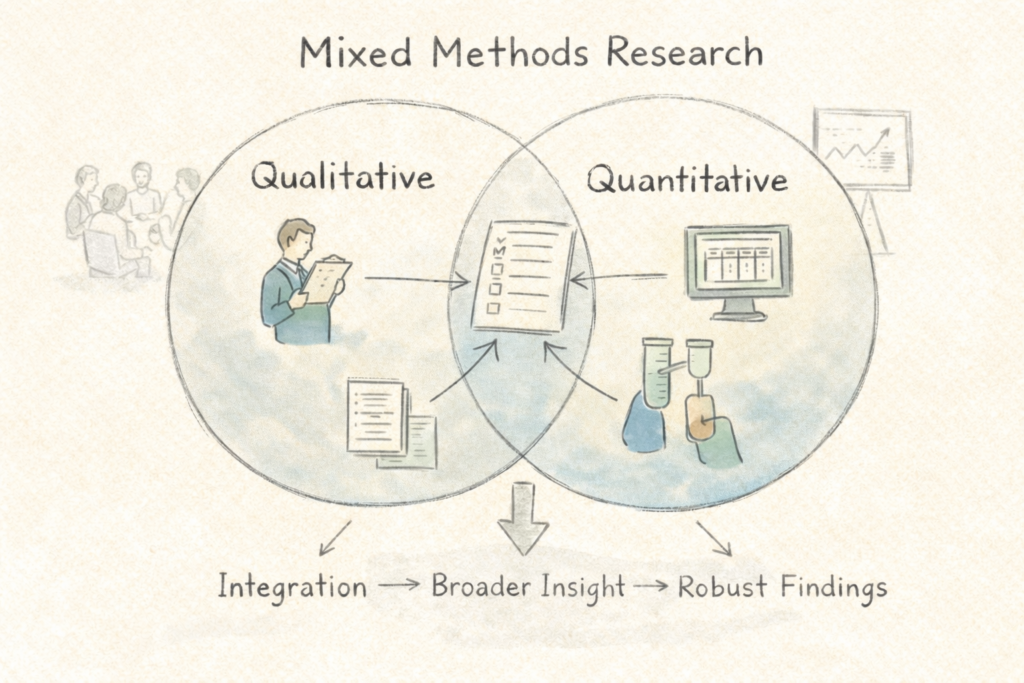
Figure 1: An illustration showing the integration of qualitative and quantitative research methods.
Common Applications of Mixed Methods Research
Mixed methods research is commonly used in areas where both explanation and measurement are required. Typical applications include:
- Policy and programme evaluation
- Organizational and management studies
- Education and health research
- Social and behavioural research involving complex interventions
In these contexts, qualitative methods may be used to explore experiences or implementation processes, while quantitative methods assess outcomes or relationships between variables.
Mixed Methods and Research Design
The use of mixed methods has important implications for research design. Decisions must be made regarding the timing, priority, and integration of qualitative and quantitative components. These decisions shape the overall structure of the study and influence how findings are interpreted.
Mixed methods research designs may vary in terms of whether qualitative and quantitative components are conducted sequentially or concurrently, and whether one component plays a dominant role. These design considerations will be addressed in more detail in subsequent articles.
Methodological Considerations
Although mixed methods research involves the use of both qualitative and quantitative methods, it remains grounded in methodological assumptions about knowledge and inquiry. Researchers must ensure coherence between their methodological orientation, research design, and choice of methods.
Clarity at the methodological level is particularly important in mixed methods studies, as the integration of different approaches raises questions about epistemological compatibility and analytical rigor.
Conclusion
Mixed methods research provides a structured approach to integrating qualitative and quantitative methods within a single study. By combining different forms of data and analytical perspectives, it enables researchers to address complex research questions with greater depth and robustness. When applied thoughtfully and coherently, mixed methods research enhances both the explanatory power and credibility of social science and management research.
This discussion builds on earlier explanations of research methods and the comparison between qualitative and quantitative research methods, which clarify the role of different techniques in empirical inquiry. It is also closely related to research design, where decisions about the integration of methods are formally structured.
Leave a Reply