In research writing, particularly within management and social science disciplines, the terms methodology and research strategy are frequently used interchangeably. While this casual usage is common, it often leads to conceptual confusion and weak justification of research design. Methodology and research strategy operate at different levels of the research process, and distinguishing between them is essential for methodological clarity and rigor.
What Is Methodology?
Methodology refers to the overarching logic, rationale, and orientation that guides how a research study is designed and conducted. It explains why particular approaches to inquiry are appropriate for addressing a research question. Methodology is not limited to techniques or procedures; rather, it provides the conceptual framework that connects philosophical assumptions, research objectives, and the overall approach to investigation.
Methodological choices are informed by assumptions about:
- what kind of phenomenon is being studied,
- what counts as valid knowledge about that phenomenon, and
- how such knowledge can be generated and justified.
In this sense, methodology operates at a conceptual and justificatory level. It answers questions such as: Why is this approach suitable? and On what grounds are these research decisions defensible?
What Is Research Strategy?
A research strategy refers to the general plan or structured approach used to carry out the study in practice. It specifies how the research will be organised and provides a blueprint for data generation and analysis. Common research strategies include case studies, surveys, experiments, ethnography, and action research.
Research strategy answers more practical questions, such as:
- What kind of study is being conducted?
- How will participants, cases, or data sources be selected?
- What form will the data take?
While research strategy is informed by methodological reasoning, it operates at a more concrete and procedural level. It translates methodological logic into an actionable research design.
How Methodology and Research Strategy Relate
The relationship between methodology and research strategy is best understood as hierarchical rather than interchangeable.
Methodology provides the guiding framework within which a research strategy is selected. In other words, methodology explains why a particular strategy is appropriate, while research strategy explains how the study will be structured.
For example, a researcher adopting an interpretive methodology, one that seeks to understand meaning and experience, may select a case study or ethnographic strategy to explore a phenomenon in depth. Conversely, a researcher working within a positivist methodology, focused on measurement and causal explanation, may adopt an experimental or survey-based strategy.
In both cases, the research strategy is shaped by methodological assumptions, not chosen in isolation.
An Example from Management Research
Consider a study examining employee engagement in an organization.
A researcher may adopt a methodology that emphasises understanding employee experiences and interpretations. Within this methodological framework, a case study strategy may be chosen to examine engagement within a specific organisational context. Interviews, observations, and document analysis may then be used as methods.
Alternatively, a researcher may adopt a methodology oriented toward measurement and generalisation. In this case, a survey strategy may be selected to collect standardized data across multiple organizations, supported by statistical analysis.
In each scenario, the research strategy reflects the methodological logic guiding the study. Confusing the two would make it difficult to justify why a particular approach was taken.
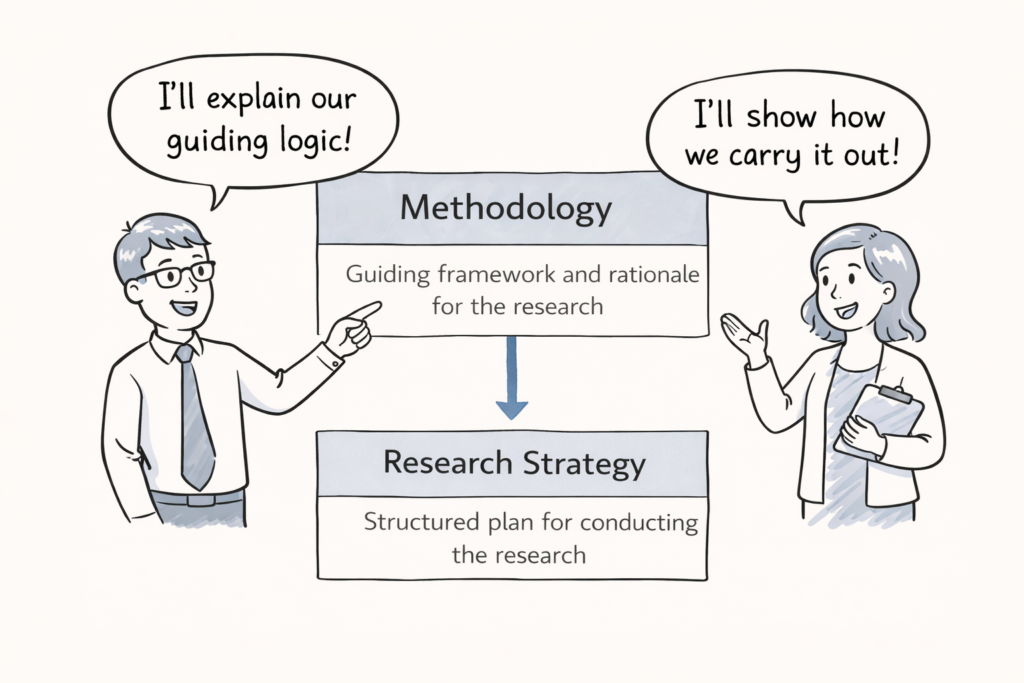
Figure 1. Methodology vs Research Strategy
Why the Distinction Matters
Failing to distinguish between methodology and research strategy can lead to several problems in research writing:
- Weak or unclear justification of research design
- Overemphasis on methods without conceptual grounding
- Difficulty explaining research decisions to examiners or reviewers
By contrast, being explicit about this distinction strengthens the coherence and transparency of a study. It allows researchers to demonstrate that their design choices are not arbitrary, but logically connected to their research aims and assumptions.
Conclusion
Methodology and research strategy serve distinct but complementary roles in research. Methodology provides the underlying logic and justification for how a study is approached, while research strategy provides the structured plan for implementing that approach in practice. Keeping this distinction clear is a key marker of rigorous and well-designed research.
The distinction between methodology and research strategy becomes clearer when viewed alongside the philosophical assumptions that underpin research design. For a deeper understanding of how such assumptions shape methodological choices, readers may refer to “Ontology in Research: A Clear Explanation.”
Leave a Reply to Qualitative vs Quantitative Research Methods: A Clear Comparison Cancel reply