In research writing, research design is often mentioned alongside terms such as methodology, methods, and research strategy. While closely related, research design serves a distinct purpose within the research process. Understanding what research design is and what it is not is essential for developing a coherent and defensible study, particularly in management and social science research.
What Is Research Design?
Research design refers to the overall plan or structure that guides how a research study is conducted in order to answer the research question. It specifies how the different components of the study fit together logically, from data generation to analysis, while ensuring that the research objectives are addressed systematically.
In simple terms, research design provides a blueprint for conducting the study. It does not merely describe the techniques used to collect data; rather, it outlines how those techniques are organized and sequenced to produce credible findings.
A well-defined research design clarifies:
- what type of data will be collected,
- how the data will be generated or obtained,
- how the data will be analysed, and
- how the research question will be addressed through these choices.
Research Design Within the Research Process
Research design sits between research strategy and research methods. While research strategy refers to the broad approach adopted for the study (such as a case study or survey), research design translates that strategy into a concrete and actionable plan.
At the same time, research design differs from methodology. Methodology provides the overarching logic and justification for how research should be conducted, whereas research design focuses on structuring the study in practice. In this sense, research design operationalizes methodological reasoning without prescribing specific data collection tools.
Common Types of Research Design
Research designs vary depending on the nature of the research question and the objectives of the study. Some commonly used research designs in management and social science research include:
- Exploratory research design, used when a topic is not well understood and the aim is to gain initial insights.
- Descriptive research design, which seeks to describe characteristics, patterns, or phenomena as they exist.
- Explanatory research design, focused on examining relationships between variables and explaining causal mechanisms.
- Longitudinal research design, which involves collecting data over an extended period to examine change.
- Cross-sectional research design, where data are collected at a single point in time.
These designs are not inherently tied to specific methodologies; rather, they are selected based on the research question and the type of understanding the researcher seeks to develop.
An Example from Management Research
Consider a study examining employee turnover in a large organization.
A researcher may adopt a survey-based research strategy to gather data from employees. Within this strategy, the research design could be cross-sectional, involving the collection of data at one point in time to identify patterns and associations between turnover intention and workplace factors.
Alternatively, the same topic could be approached using a longitudinal research design, where data are collected from the same employees over multiple time periods to examine how turnover intentions change and what factors influence those changes.
In both cases, the research design structures how the study unfolds, even though the underlying topic remains the same.
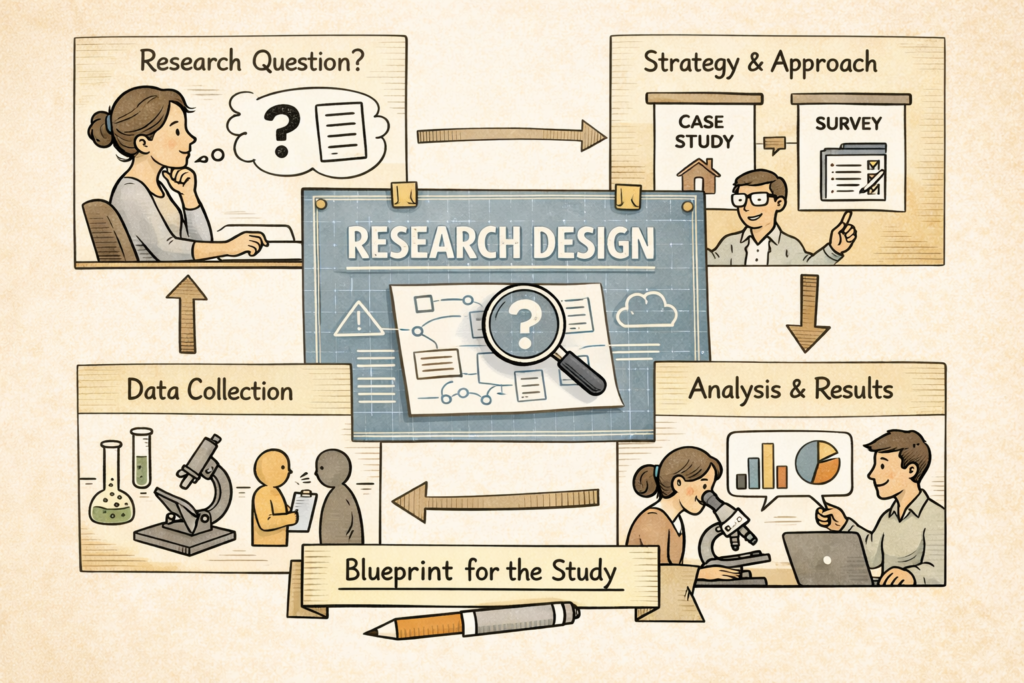
Figure 1: Research design as the blueprint that connects the research question, strategy, data collection, and analysis into a coherent study.
Why Research Design Matters
Research design plays a critical role in ensuring the credibility and coherence of a study. A poorly defined research design can result in:
- misalignment between research questions and data,
- weak or inconsistent findings, and
- difficulty justifying research decisions to reviewers or examiners.
By contrast, a clear research design demonstrates that the study has been thoughtfully planned and that methodological and strategic choices are logically connected. It allows readers to understand how conclusions were reached and to assess the robustness of the research process.
Research Design and Academic Rigor
Explicitly articulating the research design is also a marker of academic rigor. It signals that the researcher has considered not only what data to collect, but also how the structure of the study supports valid and meaningful interpretation.
In academic writing, clearly stating the research design helps situate the study within existing literature and clarifies its contribution. It also enables other researchers to evaluate, replicate, or build upon the study in future research.
Conclusion
Research design provides the structural framework that connects research questions, strategy, and data in a coherent study. While it is informed by methodological reasoning, research design focuses on organizing the research process in a systematic and transparent manner. Understanding this concept is essential for producing well-structured and defensible research.
To better understand how research design fits within the broader research process, readers may find the post “Methodology vs Research Strategy: A Clear Distinction” helpful, as it clarifies how research design emerges from earlier methodological and strategic decisions.
Leave a Reply to Qualitative vs Quantitative Research Methods: A Clear Comparison Cancel reply